Join the Shadow Venom's Workshop Discord Server!
Check out the Shadow Venom's Workshop community on Discord - hang out with 3340 other members and enjoy free voice and text chat.
ForgeLab
Things VAM did not have, built so that dropping them on an atom is the whole setup.
Things VAM did not have, built so that dropping them on an atom is the whole setup.
 What the line is for: building the things that are not there
Or maybe some of these things did exist before, but even for me, they were simply too complicated to actually use.
Which is also why nothing here is a prop pack, and nothing here is a simplified version of something else: there was nothing to simplify. These are capabilities added to VAM, generated in code at runtime, with no Unity in the loop and nothing extra for you to install.
The design philosophy: two halves, and the whole point is that you never have to pick one
Plugins usually choose. Either it is simple and you find its ceiling in an afternoon, or it is powerful and you spend that afternoon reading before anything appears on screen. Refusing that choice is the shape of this entire line.
 If you just want to play, it is already done. The test we hold ourselves to is specific: load the plugin, do nothing else, and the right thing is on screen. No asset to find, nothing to model, nothing to point at anything. If you have to configure it before it works, we got the defaults wrong, and that is a bug on our side rather than a step on yours.
 If you are building something serious, the ceiling is a long way up. Nothing is hidden to keep a panel tidy, and no control gets deleted because the list got long. Every parameter is an ordinary VAM storable, so all of it is drivable from Timeline, from triggers, and from other plugins.
A player never meets the complexity. A creator never has to fight the simplicity.
 The line so far
| Plugin | What it is |
|---|---|
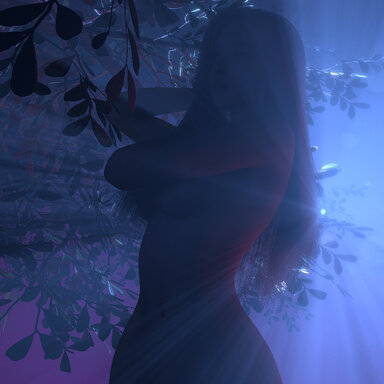
 Lumen Forge | Volumetric light you can see. Nine plugins across whole-sky shafts, window god rays, follow spots, full stage rigs and cold pyro, generated in code, spending none of VAM's six pixel lights unless you ask. |
 Tail Forge | Every kind of tail, in one plugin, with real physics. Drop it on a Person and it is already moving. |
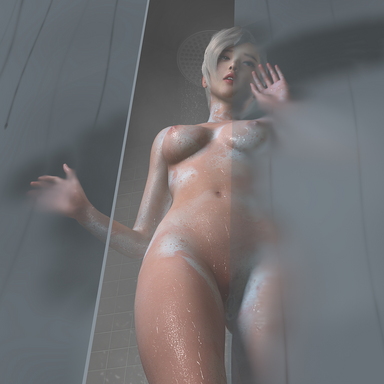
 Steam Forge | Steam off her skin, water running down it, and room-scale volumetric fog that takes the shape of anything already in your scene. |
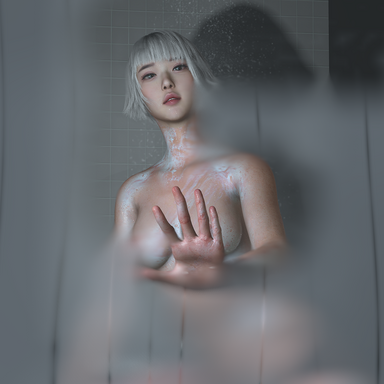
 Glass Forge | Glass that reflects the actual room, bends what is behind it, fogs over so you can wipe it with a hand, and breaks when you hit it. Flat, curved, or a tube around her. |
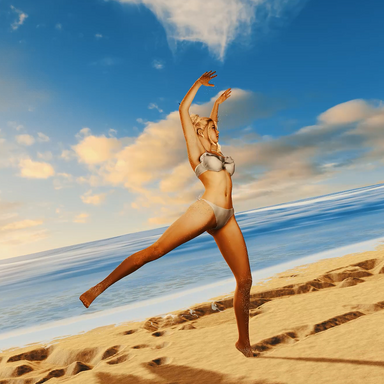
 Sea Forge | A beach that remembers. Sand that takes her weight and keeps the shape, a sea that wets it, foams on it and comes back for the prints, and sand on her skin that falls when she moves and comes off under your hand. Generated from one Empty atom, no asset. |
More in the line. Each one ships finished, plug and play, and measured.
TAILFORGE 
V1.2
Grow a tail. Or nine. Or become the serpent.
One plugin. No Unity, no Blender, no rigging, no keyframes.
 Made for the VAM community, born from a request on my Discord
Part of ForgeLab by Shadow Venom.
 You know the old way. Model a tail in Blender. Rig it bone by bone. Export FBX. Build an AssetBundle in Unity 2018. Smuggle it into VAM through an invisible-clothing carrier. Then keyframe every little swing in Timeline. An evening of pipeline for one wag.

TailForge deletes all of it.
Add ONE plugin to a Person and a fully physical, fully customizable tail grows out of them : mesh, textures, physics and motion are all generated by code, live, right in front of you. Pick a preset, drag a few sliders, done. Your character has a tail that swings, collides, droops, wags and reacts like it grew there.

And it doesn't stop at tails.
 15 PRESETS · ONE CLICK EACH
Every one a complete identity : shape, coat, colors, material and motion.


Same girl, same pose, just the presets and a couple of sliders (yes, the pom-pom chains are a slider).
 CAT : sleek dark tail with a soft short coat, lazy sway.
- FOX : orange brush with a white fluffy tip. The fox IS the fluff.
 FOXY (NEW) : the realistic fox: a leaf-shaped brush, thin at both ends and fat in the middle, fur combed toward the tip. Built from a community sketch : this is the one you hang on a real vixen.
 DEMON : long, whip-thin, glossy leather, classic spade tip.
 DRAGON : thick, heavy, keeled scales with an oil-film sheen.
 RED PANDA : chunky ringed plush. Instant cuteness.
 WOLF : silver brush curving up over the back, long guard hairs.
 CORGI : short perky stub with a brown tip, fast happy wag.
 SNOW LEOPARD : long thick smoke-pale tail, charcoal rings.
 KITSUNE : NINE white tails fanning out behind. Yes, nine. All physical, all fluffy, all swaying with their own rhythm.
- GUMIHO (NEW) : the Korean nine-tail: nine leaf-blade tails, cream with white tips, each one a slender pointed brush. If you know a certain nine-tailed fox from a certain game : yes, her.
 SERPENT : a full lamia lower body: your character's legs vanish and a 3-meter snake body takes their place, scales, belly plates and all, slithering for real.
 MERMAID : a fish tail with fine iridescent scales, a silver belly, diamond-dust sparkle and a big horizontal fluke. Swims with a dolphin wave.
- OCTOPUS : eight tentacles under a mantle skirt. Ink-black with bronze tips, suckers on the undersides, writhing on its own.
Every preset is a starting point. Change anything after.
BEYOND TAILS · LOWER-BODY FORMSSerpent, Mermaid and Octopus don't sit ON your character : they REPLACE the lower body:
 Built-in "hide lower body" : one toggle hides legs, feet and hips (and manages their colliders). No extra plugins needed.
 A sculpted hip interface ("cowl") grows from the waist and blends the human half into the creature half, dialed to sit naturally on the body, adjustable for any morph.
 Load in ANY pose. The attach system reads the skeleton's anatomy, not the world. Kneeling, sitting, lying, it seats correctly.
Half girl, half legend, one plugin.
 FULLY PROCEDURAL, PLUG & PLAY · ZERO CUA ASSETS
There is no mesh file. There is no texture folder. Everything is generated at runtime:
 The body : a smooth skinned tube with five tip shapes (Point, Round, Spade, Tuft, Fluke), adjustable length, thickness, taper, curl, resolution, even a "beads" slider for pom-pom chains. New in v1.1: a "belly" slider morphs the profile into a true leaf/spindle (thin stem, fat middle, pointed tip), and "root width" locks the body junction to anatomical size : build a monster tail, the insertion point stays human-sized.
 The skin : albedo, normal map, specular and gloss maps are all baked by code. Four pattern engines: Plain gradient, Snake scales (imbricate, keeled, with belly plates and saddle markings), Fish scales (fine crescent lattice with per-scale shimmer and a countershaded silver belly), and Octopus (papillae skin with double rows of suckers on the arm undersides).
 The colors : base + tip pickers drive everything: gradients, ring bands (raccoon style), scale shimmer, markings.
Change a slider, watch it rebuild in a blink. No files were harmed.
 REAL PHYSICS, BATTLE-TESTED
 A proper joint chain with spring/damper control : stiffness from liquid-soft to muscular.
 REAL collision with the floor and scene objects (long serpent bodies drape and drag along the ground properly).
 A six-round-hardened anti-explosion system: drag your character around by the gizmo, use "Freeze Physics While Grabbing", teleport them across the scene, and the tail rides along calmly and settles. It survives dancing. It survives everything we could throw at it.
 Tail physics never fight the person: colliders are managed and re-exempted automatically, even when VAM regenerates them.
 FUR & SCALES · CUSTOM SHADERS INCLUDED
TailForge ships its own shader bundle (auto-loaded, nothing to install):
- FUR : multi-layer shell fur with soft wrap lighting (colored light wraps around the fluff instead of cutting a hard line), per-layer fade for a dense core and wispy edges, streak or speckle coat patterns, up to 32 layers. New in v1.1: a "fur lean" slider combs the whole coat toward the tip : from standing plush to sleek swept fur.
- SCALES : always-on normal mapping, per-pixel gloss, view-angle IRIDESCENCE and diamond-dust SPARKLE : the mermaid shimmer.
- SNAKE SKIN : satin sheen with an oil-film rainbow that lives in the specular : the sunbeam-snake look.
 POST-FRIENDLY : a dedicated depth-ghost system makes the fur play nice with PostMagic Depth of Field: the fluff blurs as one coherent volume instead of tearing into artifacts. (Two sliders let you tune how the fur sits in the depth of field.)
 MOTION & PERFORMANCE · ZERO KEYFRAMES
 Six motion modes: Still, Sway (lazy figure-8), Wag (happy dog), Slither (traveling S-wave along the body), Swim (vertical dolphin wave), and new in v1.1, JET: the real octopus swim. All eight arms snap together in one synchronized power stroke and spread back out slowly, root-to-tip whip included. Speed controls how often it fires; every pulse completes, at any setting.
 Motion variation and motion follows body (new in v1.2) : the difference between a loop and a living tail. See the section above.
 TIP TRACKING : point the tail at ANY atom or controller: an Empty you animate in Timeline, your character's own hand, another person. The tail chases it with physics. A tail that performs, with zero keyframes.
 Everything is a storable : presets, sliders and colors all save with your scene and can be driven by triggers.
NEW IN V1.2 · A TAIL THAT LIVESThe request that started this update, from @youhotyet in the discussion thread:
"Is there a way to have the tail switch between different movement modes on a timer automatically? It would be a lot more immersion to the tail movement vs just a repeating motion."
The answer turned out to be better than a timer. Within one creature the modes are not really separate states: Still, Sway and Wag are three points on ONE amplitude-and-speed axis (amplitude zero is Still, small and slow is Sway, big and fast is Wag). So rather than jumping between them on a clock, the tail now wanders along that axis on its own.
- Motion variation (0-1) : turn it up and the tail drifts, slows down, hangs off to one side for a while, flicks, and settles again. Never the same loop twice, and no visible snap between states because nothing ever switches. Each tail in a nine-tail set gets its own rhythm instead of all nine breathing in unison.
 Still, but alive : with variation on, Still stops meaning frozen. The tail rests, and every now and then it moves. This is the idle most anthro characters actually wanted.
 Motion follows body (0-1) : the tail swings wider while she walks and settles down when she stops.
Both sliders default to 0, so nothing changes until you want it to. And if you do want hard mode switching for a transformation scene, Motion Mode has always been trigger-driveable from Timeline.
 V1.2 ALSO REBUILDS THE PANEL
- Four tabs : SHAPE, MOTION, LOOK, BODY, grouped by what you are doing rather than by what kind of parameter it is. The master switch, the preset picker, Rebuild and the two Fade buttons are pinned above the tabs, so they are reachable from every page.
 No more dead controls : nine sliders used to sit there looking live while doing nothing (tail spread with one tail, the cowl sliders with no cowl, sparkle on a shader that has no sparkle, and so on). They now appear only when they actually do something.
 Copy status : VAM panel text cannot be selected, so the status readout now has a button that puts it on your clipboard. Much easier to paste into a bug report.
 Fur render queue : a sort-order slider for the fur shells, next to the color pickers, for scenes where water or glass wins the tie. Default is auto, which is exactly what shipped before.
- Every button is also an action : Rebuild, preset export/import, refresh track targets and copy status can all be fired from a trigger now, not just from the panel.
NEW IN V1.1 · TRANSFORMATION & SHARING Global tail switch : tail enabled toggle + toggle tail action, fully trigger-driveable. Tail on, tail off, mid-scene, no plugin reloading.
 Transformation fade : Fade tail in / Fade tail out with a custom duration (0.1–30s). The tail materializes or dissolves; on Serpent / Mermaid / Octopus the legs crossfade the opposite way : a real, gradual transformation, one button.
 Timeline-ready : the fade rides a plain tail opacity storable (0–1). Keyframe it in Timeline for any curve you want: slow-burn transformations, flickering spirit tails, you name it.
- Preset files : export your tail to a .json, import someone else's. Dial in the perfect tail and share it on the Hub or Discord : the file carries the complete identity: shape, coat, colors, material, motion.
 HOW TO USE
 Add the plugin to a Person atom: TailForge.cslist
- A tail appears within a second. Open the plugin UI.
- Pick a Style Preset. Dial colors and sliders to taste.
- For Serpent / Mermaid / Octopus: the preset handles everything (including hiding the lower body). Use cowl height / flare and the offset sliders to fit the hip interface to your morph.
- Optional: set a Track Atom + strength and watch it perform.
Load order, pose, scene : none of it matters. It just works.
 HONEST NOTES & LIMITS
Up front about the edges, so nothing surprises you.
- This is an appendage/body engine, not a Person replacement: the tail is physical and collides.
 Performance scales with what you build: a single fluffy tail is cheap; the Octopus runs 72 rigidbodies and 8 chains, fine on a gaming rig, but keep an eye on it in heavy scenes.
- Fur + Depth of Field is a fundamentally hard combination in Unity's old post stack. TailForge's depth-ghost handles it well, and you can always toggle fur depth ghost off for a dreamy soft-focus look instead.
 Serpent-type bodies assume the scene floor is at ground level for their resting drape. On elevated platforms, expect to nudge.
 If you resize the Person, hit Rebuild tail now once.
 Found something weird? Want to request a tail type? Post in the discussion : this plugin grew up on user reports and it will keep growing on them.
 What's new
v1.2 : the "make it feel alive" update. Thank you @youhotyet
- Motion variation : the tail wanders through drift, stillness and flicks on its own instead of running a perfect loop. Nine-tail sets desynchronize properly.
- Motion follows body : swings wider while she walks, settles when she stops.
- Rebuilt panel : four tabs, a pinned header, and nine controls that used to be visible-but-dead are now hidden until they mean something.
 Smoother chains : the default segment count went 10 to 18, and eight presets were re-cut to match. Curl, stiffness and damping were rescaled along with them, so each preset keeps the droop and the resting arc it always had and only gains smoothness.
- Fur render queue slider, for sorting the fur against water and glass.
- Buttons are actions : Rebuild, preset export/import, refresh track targets, copy status. All trigger-driveable.
 Fixed : dragging motion speed used to jump the wave's phase (a visible snap). The motion now runs on a continuous phase, so speed can change at any time.
- Fixed : importing a preset file written by an older build silently kept whatever was already loaded for any setting the file did not contain. A preset file is a complete snapshot again.
Upgrading from v1.1One thing to know. VAM does not write a value into a scene when it equals the plugin's default, so raising the default segment count from 10 to 18 reaches back into old saves: a hand-tuned tail that happened to sit at exactly 10 segments will load at 18 and feel a little softer. Scenes still on a preset are unaffected, because the preset restores its own number. If a tail loads softer than you remember, set Physics segments back to 10 and it is exactly as it was.
v1.1 : the community-request update. Thank you TheGesterr & KuRO!
- 2 new presets: FOXY (realistic leaf-profile fox brush) and GUMIHO (nine leaf-blade tails), 15 total.
 3 new shape axes: belly (leaf/spindle profile), fur lean (comb the coat toward the tip), root width (the body junction stays anatomical no matter how big the tail gets).
- JET motion mode : synchronized octopus power stroke: snap together, spread slowly, like it's pushing water.
- Global switch : tail enabled + toggle tail, trigger/plugin API included.
- Transformation fade : timed fade in/out (up to 30s), serpent legs crossfade in reverse, and a Timeline-keyframeable tail opacity axis.
- Preset export/import : save your tail as a .json file and share it.
v1.0
 Initial release: 12 presets, 4 skin engines, 3 custom shaders + depth ghost, 5 motion modes, tip tracking, multi-tail (1-9), lower-body forms (Serpent / Mermaid / Octopus), full physics with anti-explosion suite.
Made so your characters can be a little more legend and a little less human,
without you ever opening Unity.
without you ever opening Unity.