




A special thanks to MacGruber for creating such a great plugin.
I referenced all the LUT-related settings and other basic elements from it.
The coding was done by ChatGPT, though there were a lot of trial and error...
From version fix.13a, you no longer need to load the asset bundle directly into a CUA.
If you inject the plugin into any atom that has a plugin tab, it will automatically reference the resources inside the asset bundle.
All features operate based on shaders.
And the code for splitting the group tabs was referenced from moyashi PostProcessing plugin.
https://hub.virtamate.com/threads/post-processing.42942/
View attachment 566915
View attachment 566916
lut
can use two LUTs at the same time. If you plan to use only one, just use LUT1.
bloom1
bloom2
For Bloom2, if you want only specific objects to sparkle, you’ll need to adjust the lighting-related settings of the clothing or asset, such as gloss or spec.
If a clothing item uses a black spec texture, the black areas will not produce any sparkle.
Features that are not enabled do not affect performance.
Based on my testing, SuperShot is able to capture images in high resolution, and the effects worked as designed.
However, I can’t guarantee what kinds of bugs might occur in real-world use.
I referenced all the LUT-related settings and other basic elements from it.
The coding was done by ChatGPT, though there were a lot of trial and error...
From version fix.13a, you no longer need to load the asset bundle directly into a CUA.
If you inject the plugin into any atom that has a plugin tab, it will automatically reference the resources inside the asset bundle.
All features operate based on shaders.
And the code for splitting the group tabs was referenced from moyashi PostProcessing plugin.
https://hub.virtamate.com/threads/post-processing.42942/
View attachment 566915
View attachment 566916
lut
can use two LUTs at the same time. If you plan to use only one, just use LUT1.
bloom1
bloom2
For Bloom2, if you want only specific objects to sparkle, you’ll need to adjust the lighting-related settings of the clothing or asset, such as gloss or spec.
If a clothing item uses a black spec texture, the black areas will not produce any sparkle.
Features that are not enabled do not affect performance.
Based on my testing, SuperShot is able to capture images in high resolution, and the effects worked as designed.
However, I can’t guarantee what kinds of bugs might occur in real-world use.











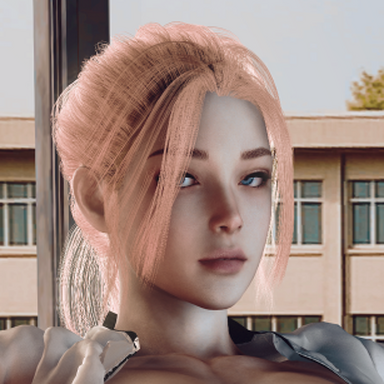
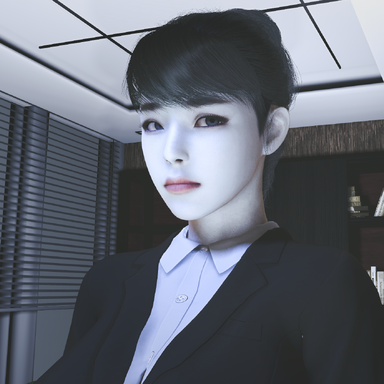


From what I’ve looked into so far, I suspect two main possibilities: an issue with the camera rendering order—
such as Post Another activating on the layer right after SuperShot’s anti-aliasing—
or Post Another itself causing the aliasing problem. When the plugin is active, the default Blender option is applied, and there’s a chance that this is what’s introducing the aliasing.
To save performance, I used a format suited for FHD resolution.
I even tried switching to a higher-quality format only when the SuperShot plugin was active, but it didn’t have any effect—possibly because I modified the code incorrectly.
When I attempted to check if it was a rendering order issue between effects, things got tangled enough that the visuals looked different from before.
It’s all quite complicated, so I really wish someone skilled with code could help out. Honestly, I’m not even sure about the cause I’ve identified.